Maternal mental health support for Indian women
Becoming a mother can turn your world upside down, and most therapists aren’t trained to help you through it. Ours are. Indian-origin therapists, specially trained in maternal mental health, who understand both what you’re feeling and the family around you.
Online, confidential and in your time zone, wherever you are in the world.
The gap no one talks about
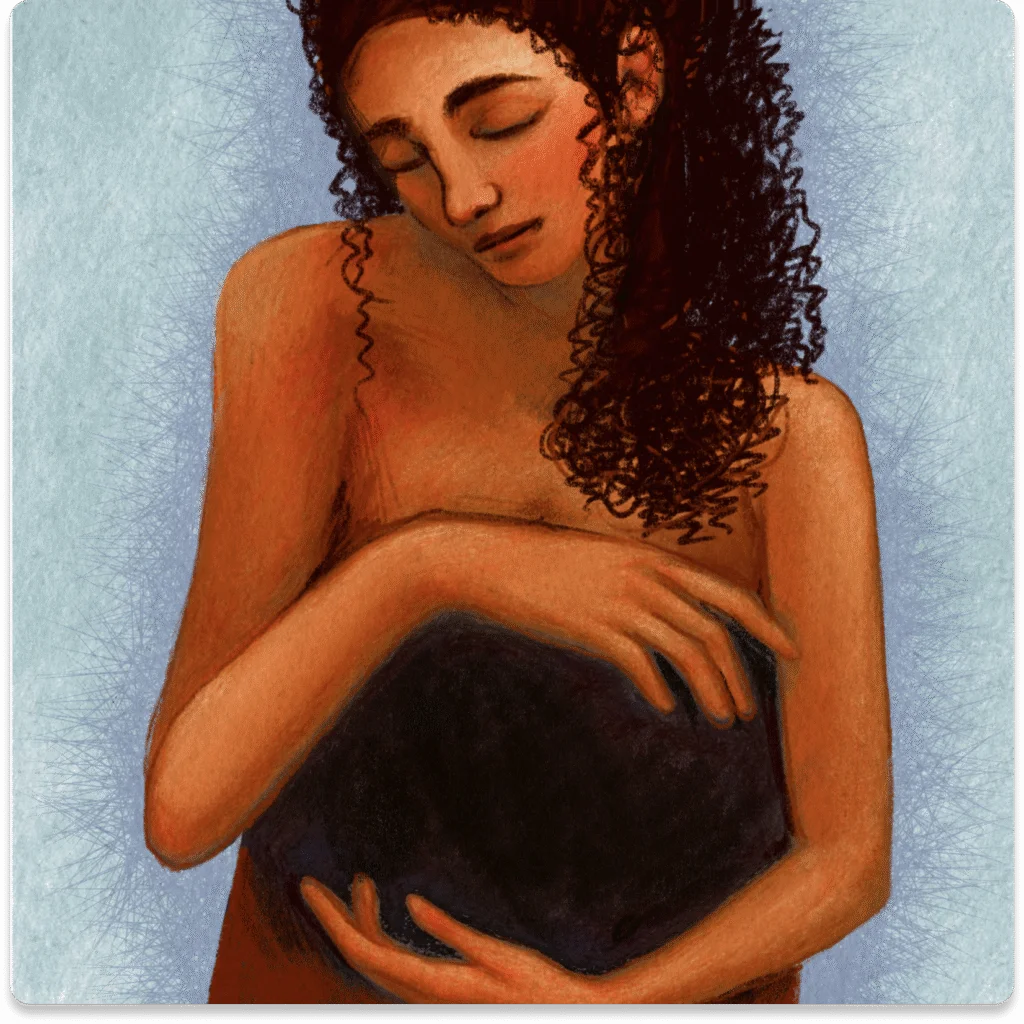
Most psychology courses in India include little or no training in maternal mental health. That leaves very few therapists equipped to support the huge changes a woman goes through during pregnancy and after birth.
So too many mothers end up explaining themselves to someone who doesn’t understand, or not getting help at all.
Built from 100+ real stories, not just a textbook
We spent years listening to more than 100 Indian women around the world, through pregnancy, postpartum, infertility and loss. What they told us became our evidence-based framework for maternal mental health.
Care shaped around your story. Miscarriage, IVF, postpartum depression, or the quiet loss of who you were before the baby: your therapy is built around what you are actually going through, to help you find your new “normal”.
Therapists trained for this, specifically. Our therapists complete in-depth training in maternal mental health, so you never have to explain why this is so hard.
Your culture is part of the conversation. From in-law expectations to raising a child far from home, your therapist understands the world you are mothering in.
COMING SOON: Maternal Mental Health Training Program
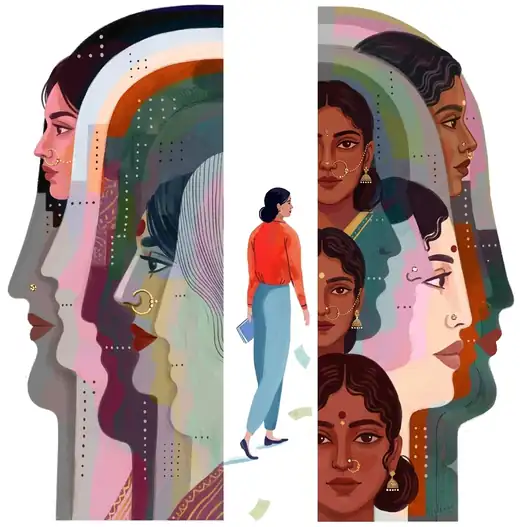
Only 1% of healthcare research and innovation goes to female-specific conditions beyond cancer (World Economic Forum & McKinsey Health Institute). What isn’t researched rarely reaches the classroom, so most therapists graduate without ever learning how pregnancy, birth and loss reshape a woman’s mind. Meanwhile, around 1 in 5 mothers in developing countries experience depression after childbirth (World Health Organization).
We set out to close that gap. Our 6-month certified framework trains psychology graduates in maternal mental health, using evidence-based methods grounded in neuroscience, psychology and real stories. To build it, we spoke with experts at every touch point in a mother’s journey: gynaecologists, clinical psychologists, neuroscientists, paediatricians, social workers and psychiatrists, because in India this topic is still rarely spoken about.
The program is built on practice, not just theory: learners work through the methods hands-on, so they are ready to support mothers from their very first session.
What we can help with
- Perinatal depression: low mood, numbness or hopelessness during pregnancy and after birth
- Perinatal anxiety: constant worry, panic and intrusive thoughts during pregnancy and after birth
- Grief: miscarriage, stillbirth, infertility, and the shift in identity that comes with motherhood
- Fertility treatment: the emotional toll of IVF and IUI
- Birth experiences: making sense of a difficult or traumatic birth
- Relationships and family dynamics: your partner, parents and in-laws, and finding your voice among them
- Inner child and parenting: healing patterns from your own childhood as you raise yours
- Returning to work: balancing career, ambition and a new baby
Not sure whether what you are feeling “counts”? That is exactly what the free discovery call is for.
Start without any risk
Your discovery call is free. You only pay once you’ve met your therapist and feel it’s the right fit.
Free discovery call
Tell us what is going on. We listen and answer your questions, with no cost or commitment.

Matched with the right therapist
We suggest the therapist who best fits your needs, background and time zone.
Begin your sessions
Meet your therapist on Google Meet. You only pay once it feels right, and you can switch therapists at any time.
Simple, transparent pricing
Your fee depends on where you live, not where you are from.
Living in India
₹2,500 + GST / session
- Free discovery call
- Pay per session, no packages
- Switch therapists at any time
- Online on Google Meet
Living outside India
₹4,500 + GST / session
- Free discovery call
- Pay per session, no packages
- Switch therapists at any time
- Online on Google Meet
In their words
“I felt like I had become a piece of furniture in my own house. I didn’t know I had postpartum depression. And there was so much guilt about not being able to accept this role, because I had always seen my mother and aunts embrace it with pride. Therapy with Boss Naari helped me grieve my old life and find a new version of myself that I am slowly starting to love.”
Jiya*, Consultant, Amsterdam
“I wish more people spoke openly about infertility. It is such a social taboo that the whole experience becomes very isolating. IVF has been one of the most difficult chapters of my life. I am grateful I found therapy at Boss Naari, which helped me accept every failure, every pain, and every message I had absorbed about motherhood and infertility.”
Aarthi*, Chennai
“We were in a dead bedroom for years after our baby was born. The problem wasn’t physical; it was unspoken resentment towards each other while we juggled the responsibility of a child. Therapy at Boss Naari helped us see how deep that resentment had grown, and brought us back on the same page.”
Andrea and Suraj*, Germany
*Names are changed for confidentiality.
You are not the only one
Through NaariSpeaks, Indian women share their real stories of motherhood, fertility and everything in between.

The Unseen Side of intra-uterine insemination
Suchandra, an Indian woman, conceived her baby in the Netherlands through IUI. While the treatment worked on the first try, a rare, unpredicted

Navigating Motherhood Abroad
Malti gave birth to her baby in the Netherlands. As an Indian woman far from her family, she faced challenges but also embraced

The Journey of being Child-Free
Read the story of Shovna, an Indian woman choosing the childfree DINK life. A must-read for anyone on the fence about parenthood.
Questions mothers often ask
The baby blues, with tearfulness, mood swings and feeling overwhelmed, are very common in the first two weeks after birth and usually pass on their own. If low mood, anxiety, numbness or irritability last longer than two weeks, or make it hard to get through the day, it may be postpartum depression or anxiety. A free discovery call is a good first step to talk it through.
No. Unwanted, frightening thoughts, such as something bad happening to your baby, are very common after birth and are often a sign of anxiety, not of what you want or will do. They can feel unbearable, and therapy can help you manage them. If you ever feel you might act on a thought, contact emergency services straight away.
Intense anger or “postpartum rage” is something many new mothers experience but rarely talk about. It is often linked to postpartum depression or anxiety, exhaustion, and carrying too much without enough support. Therapy can help you understand what sits underneath the anger and what you need.
Bonding doesn’t always happen instantly, especially after a difficult birth, a NICU stay or a long fertility journey. It can grow gradually. If the disconnection is weighing on you, therapy offers a safe, judgement-free space to explore it.
Many women feel they have lost their identity after becoming a mother: their career, independence, friendships and body can all feel unfamiliar. You can be grateful for your baby and still miss your old life. Therapy helps you grieve what has changed and build a self that includes motherhood without being only that.
Pregnancy loss and infertility are real losses, even when others don’t treat them that way. Grief can come in waves and resurface with every cycle, scan or pregnancy announcement. Therapy gives you room to grieve on your own terms and to handle unhelpful comments from family.
Yes. Changes in intimacy, resentment over the division of care and feeling more like co-workers than partners are very common after a baby. We can suggest a therapist who works with couples.
Yes. Family support after birth can be a gift and a pressure at the same time, especially with strong views on confinement, feeding and parenting. Therapy can help you set boundaries without guilt and protect your own wellbeing.
All sessions are online on Google Meet, scheduled in your time zone, so you can join from home, around feeds and naps. Many of our clients are Indian women living in Europe, the UK, the Middle East and beyond.
No. Counselling works alongside your gynaecologist, GP or psychiatrist. If your therapist feels you would benefit from medical support, she will tell you and can provide a referral letter.
Boss Naari is not an emergency service. If you have thoughts of harming yourself or your baby, or you notice signs such as confusion, seeing or hearing things others don’t, or being unable to sleep for days, contact your local emergency number or go to the nearest hospital straight away.
Ready to take the first step?
You have been taking care of everyone. Let someone take care of you.